Aging gracefully isn’t just about skincare and maintaining a youthful appearance; true longevity is defined by mobility and independence. As we age, our bodies naturally lose muscle mass (a process known as sarcopenia) and joint cartilage can begin to wear down.
However, with a proactive approach to physical maintenance, you can protect your structural health and stay active for decades to come.
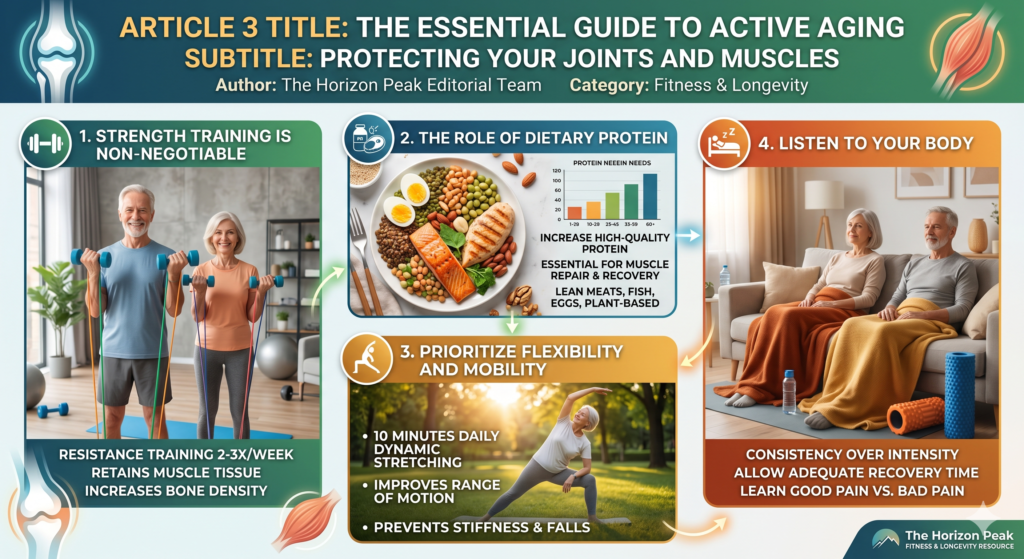
Strength Training is Non-Negotiable Many older adults gravitate strictly toward cardio, like walking or swimming. While excellent for the heart, cardio does not prevent muscle loss. Incorporating resistance training 2 to 3 times a week is crucial. Lifting weights or using resistance bands signals your body to retain muscle tissue and increases bone density, preventing osteoporosis and frailty.
The Role of Dietary Protein To support the muscle mass you are trying to maintain, your body requires adequate building blocks. As we age, our bodies become less efficient at processing protein. Therefore, slightly increasing your intake of high-quality proteins—such as lean meats, fish, eggs, or plant-based alternatives like lentils and legumes—is essential for muscle repair and recovery.
Prioritize Flexibility and Mobility Stiff joints lead to poor posture and an increased risk of falls. Dedicating just 10 minutes a day to dynamic stretching or yoga can dramatically improve your range of motion. Focus on the hips, lower back, and shoulders, which tend to hold the most tension from prolonged sitting.
Listen to Your Body Active aging is about consistency, not intensity. Pushing through acute pain is a recipe for injury. Learn the difference between the “good pain” of muscle fatigue and the “bad pain” of joint stress. Allow adequate time for recovery between active days.
Protecting your joints and muscles requires intentional effort, but the reward—a life of unhindered movement and vitality—is well worth the investment.